

Spanish From Zero: A 12-Week Plan to Your First Easy Novel
July 28, 20265 min read
A twelve-week plan from no Spanish to starting an easy novel with help: an AI Mentor course, word tracking, daily reviews and spoken practice. It works for any of the seven languages pimReader teaches.
Skip to the guideBrand new to the language? This plan includes the first month from Start a New Language From Zero: Your First Month: weeks 1–4 here are the same, so you can start with either.
The goal here is specific: by week twelve, start an easy novel in Spanish (a graded reader at A2, found by searching lecturas graduadas, or a short modern young-adult book) with translations above the hard words. It will be slow, and it should be: you read with help, not yet for pure pleasure.
The plan assumes thirty to forty minutes a day. That is a better target than "become fluent", which has no finish line and no way to tell whether it is working.
You can swap in any language you can learn in pimReader (English, German, Spanish, French, Italian, Polish or Portuguese). The path is the same.
Weeks 1–2: Build the core, out loud
Do not start with a novel. You will give up inside the first chapter.
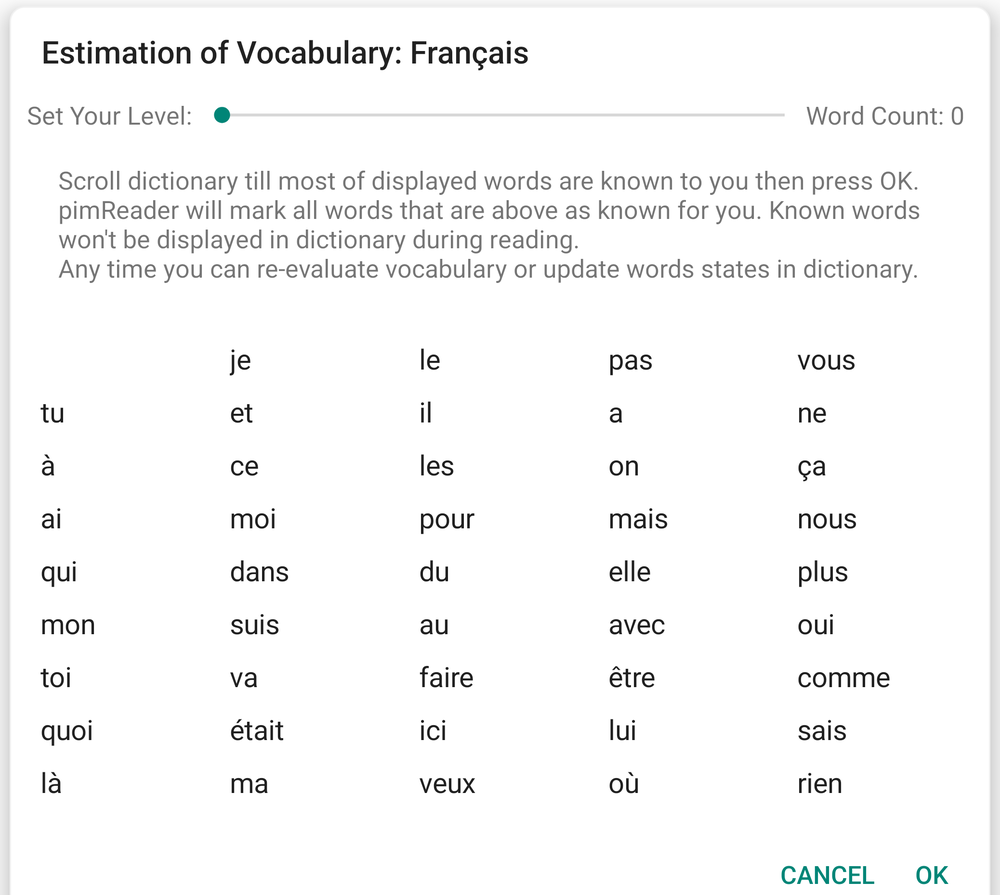
On the first screen, choose Spanish as the language you learn and your own language for translations, and let the dictionary download. The vocabulary estimate opens (its title is Estimation of Vocabulary). If you know no words yet, leave Word Count at 0 and tap OK.
Start by asking the AI Mentor for a plan:
"I want to read a novel in Spanish in twelve weeks. I know nothing. About 30 minutes a day. Build me a course."
It asks a few questions and then shows a plan: a sequence of lessons. Review it, push back if it is too ambitious, and approve it once.
Then work through the first lessons. For each one you can create a lesson book: real text, saved in your library, that you read like any other book. Vocabulary from each lesson becomes flashcards in that lesson's folder.
Two things to do from day one:
Use the audio. Turn on text-to-speech for the lesson text from the start. Spanish spelling is regular, and hearing while reading ties pronunciation to spelling before bad habits form.
Talk in the first week. Open Speaking practice when you know forty words; How to Learn a Language by Reading explains why not to wait.
Target for the end of week 2: about 120 words in your daily reviews.
Weeks 3–5: Volume, not perfection
Now shift the balance from lessons to reading.
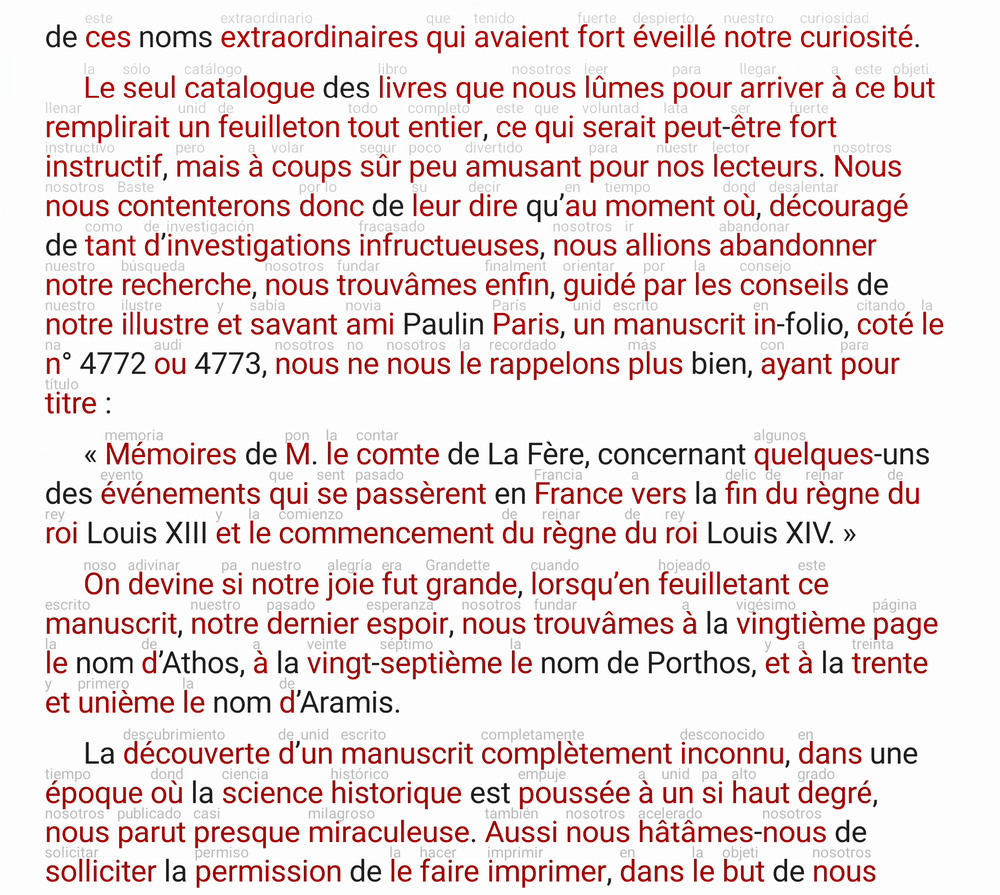
Set up a feed or two in Spanish: news, a blog, something you would read anyway. Read short articles daily, with the dictionary docked beside the text.
The tool that matters here is word tracking. As you read, pimReader tracks which words you know. Tap a word in the dictionary panel to mark it known and it stops getting a translation above it. Tick Memorize on the ones worth learning.
It also estimates your vocabulary from a word-frequency list, which helps you judge when you are ready for harder material.
Add only frequent words and words you keep meeting; How to Learn a Language by Reading explains how to choose.
Practice modes to rotate through:
- Memorize Words for recall
- Exercise (build sentences) to write your own sentences with the words you are learning
- Practice Dialogs for a conversation, line by line
Practice sessions don't change your review dates; they are extra use of the words, not a grade.
Target for the end of week 5: around 350 words, and short news articles you can read with the dictionary.
Weeks 6–8: Grammar, on demand
Grammar is easier to understand once you have met it in your reading. By week six you have seen the past tenses many times. Now a clear explanation lands on forms you already half-recognise.
Ask directly:
"I keep seeing two past tenses and I don't know when to use which. Build me a lesson on it with exercises."
You get a lesson book and an exercise book. Work through them, then go back to reading, where you will now notice the difference everywhere.
Let reading raise the questions, and study grammar as answers to them.
Keep speaking sessions going twice a week. By now they should feel like short conversations rather than word drills. Ask for a role play on a theme and it talks you through a scenario line by line. A spoken review session does change your review dates: words you get wrong come back sooner.
Target for the end of week 8: around 600 words, and the past tenses starting to make sense.
Weeks 9–12: The novel
Time to pick the book: an easy one, at about A2. If you want it free, look for fairy tales and children's stories under + → Free books first. Two rules:
Choose something you want to read. Wanting to know what happens carries you through the hard first fifty pages. Within your reach, a book you want to read beats one that is only "good for learners".
Choose something modern with a lot of dialogue. Contemporary fiction, young-adult novels, or a translation of a book you already love. Avoid nineteenth-century classics; their prose is much harder than everyday Spanish.
Dock the dictionary to the side of the page and size it so it does not cover the text.
The first two chapters will be slow. Keep going: a novel repeats its vocabulary far more than it first seems, and by chapter four the same words keep returning.
Two habits for this phase:
Look up little. How to Learn a Language by Reading gives the rule of thumb.
Memorize sparingly. About five words per chapter. The novel is now the main event; the flashcards support it.
If you get lost, ask the AI Mentor about the passage instead of reaching for a full translation. You get an explanation rather than a substitute.
What twelve weeks gets you
About 800–1,000 words in your daily reviews if you keep to the targets, the most common ones, which cover most of an everyday text, and many more that you recognise from reading. The start of an easy novel, read with help. Short conversations that hold together. And a routine that keeps going without a course.
What it does not get you: fluency, a novel read for pure pleasure, easy listening to fast native speech, or confident writing. Those are the next months.
Pick your easy novel first. Then ask the AI Mentor for the course that gets you to it.
Reading, the dictionary, word tracking, text-to-speech with the device voice, feeds and daily reviews are free; the AI Mentor course, lesson books, Practice and Speaking practice use AI, which is part of pimReader Plus. When you open an AI feature, pimReader offers Try free for a month: no card, no account, nothing renews. Tap Not now to carry on without AI.