

Three Ways pimReader Reads With You
Nobody runs out of things to read. What runs out is the evening. Here are three tools in pimReader's reader that decide what deserves it: a summary before you commit, answers from the text itself, and news ranked by what it means to you.
A reading app is usually judged by how it shows a page. We think it should also be judged by what it does about the four hundred pages you will not get to today.
pimReader's reader has three tools for that. None of them reads instead of you. Each one makes sure the hour you have goes to the right text.
1. A summary before you commit
Open the panel beside any article and you will find four ready requests: Summarize content, Short summary, Key points and Main idea. One tap, and the answer appears next to the text — the article stays where it was.
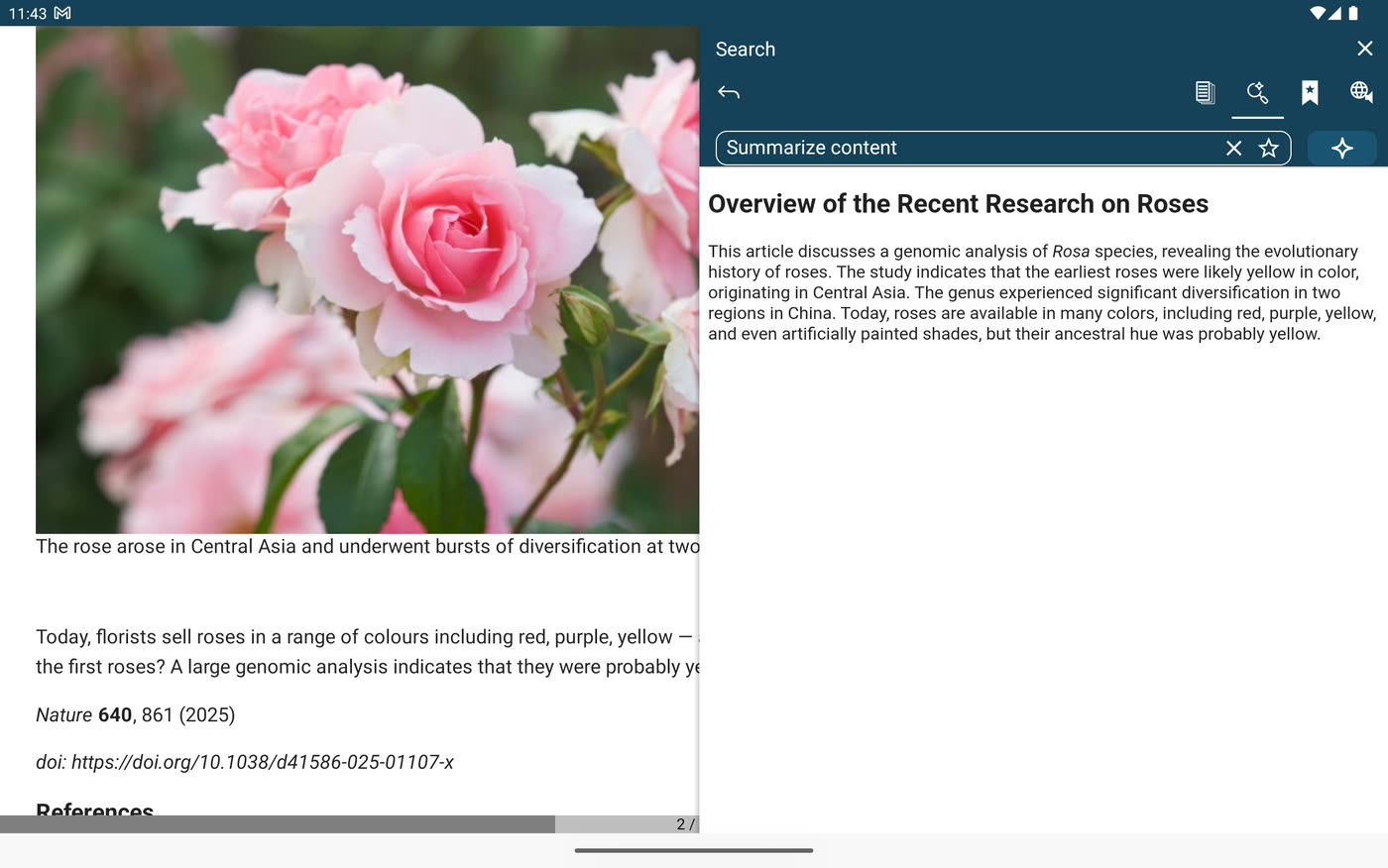
The obvious use is triage. Ten open articles, ten main ideas, and two of them turn out to be worth twenty minutes each. The other eight you have still read, in the only sense that mattered.
The less obvious use is for language learners. A hard article in a language you are still learning is much easier when you already know what it says. Read the summary first and every unfamiliar word arrives with a context to land in — you are no longer decoding, you are confirming. Then read the real thing, with translations above the line for the words you do not know.
Two details worth knowing:
- You can type your own request and save it with a star. If "explain this as if I were new to the subject" is what you always ask, it is one tap away next time.
- From the assistant's home screen you can ask for a digest of the unread news of the last two days on a topic you name. It is the fastest way back in after a weekend off.
2. Ask the text a question
The same panel takes questions. Not questions to the internet — questions to the page you are on. What does this term mean here? Which year was that? What is the author's actual argument against the proposal? The answer is drawn from the text and stays beside it, so you carry on reading from the line you were on.
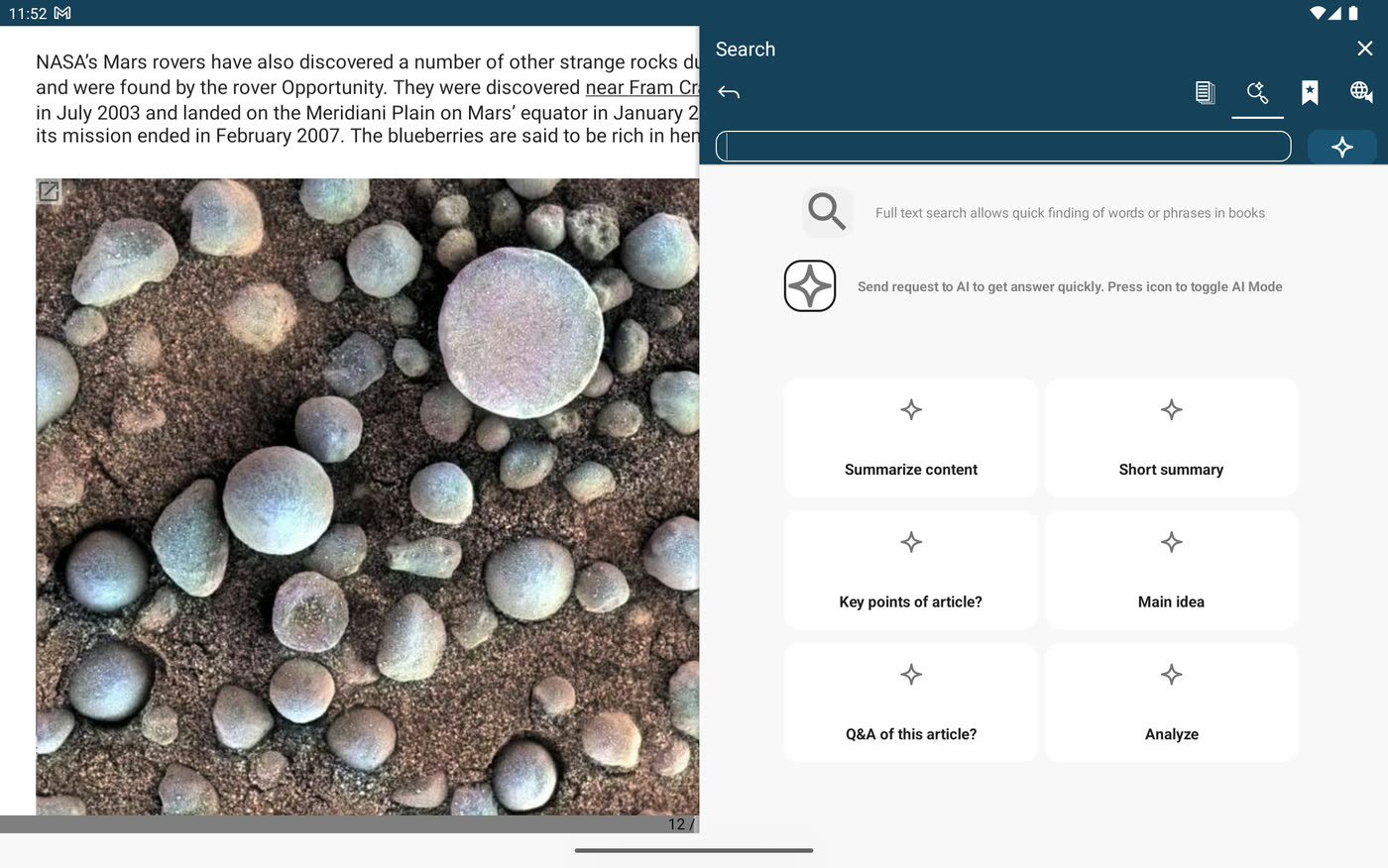
There are presets for the common cases: Q&A of this article turns a piece into questions and answers — an honest check of whether you understood it — and Analyze lists the strong and weak points of its argument.
Widen the scope and the question goes to your whole library: books, saved articles, notes, feeds. This is where a personal library starts paying rent. "What did that Nature piece say about dark matter detectors?" is answered from the article you read three weeks ago, with the source attached, so you can open it at that point.
Underneath is semantic search — search by meaning instead of by matching words. Describe the passage you half remember and it comes back, even when the words you typed are not the words on the page.
3. News sorted by meaning, and then by you
Feeds are sorted by date because that is easy, not because it is useful. The newest article is rarely the one you wanted.
So pimReader adds a second order. In any feed open Sort by, choose Semantic and name a topic — "battery technology", "the Spanish election", "sleep research" — and the articles closest to it rise to the top. Topics stay in the menu as chips, so the ones you care about are one tap away, and several can be combined. It is the same understanding of meaning as the search: an article about solid-state cells ranks high for "battery technology" without ever using the phrase.
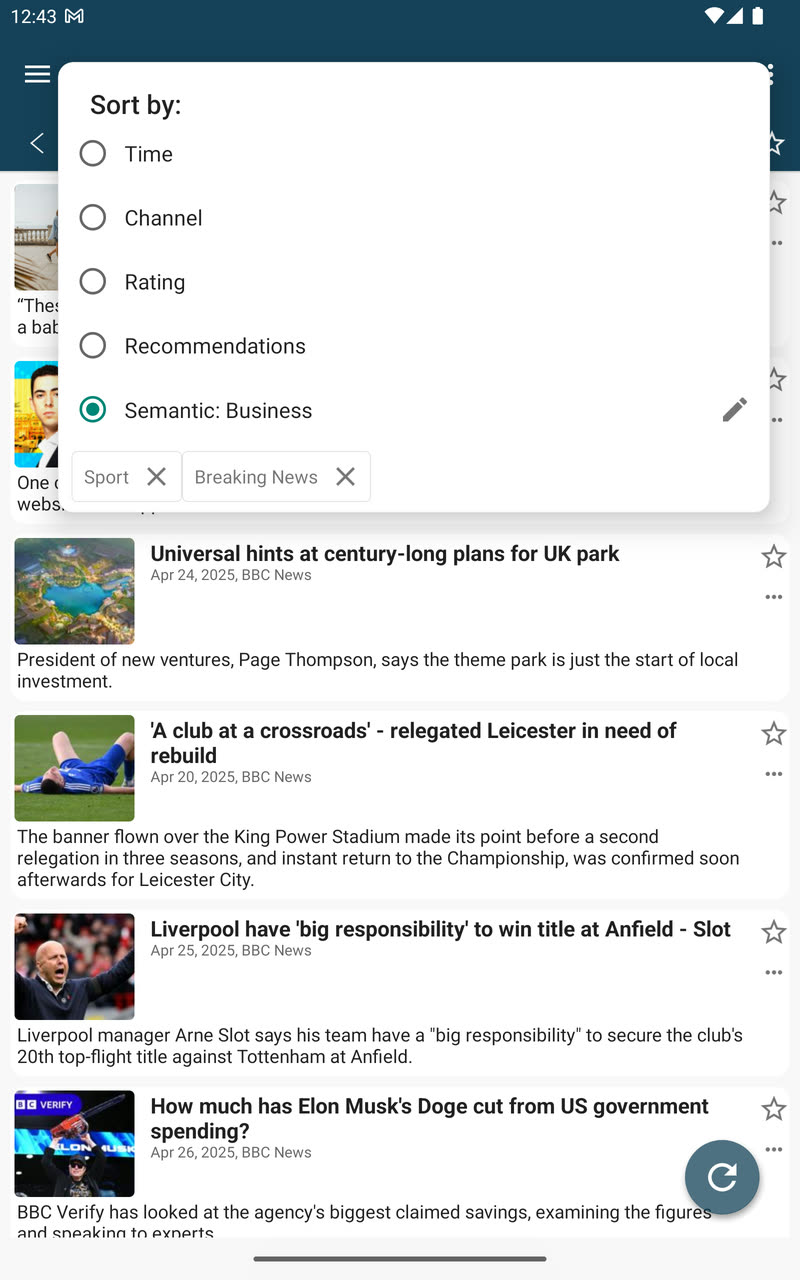
The third order needs no topic at all. After a few weeks of reading, choose Recommendations in the same menu and pimReader ranks your unread articles against your own history — what you actually read, not what you clicked. Early on the app will tell you, honestly, that it needs more data. Keep reading; the list improves as the history grows.
What this costs, and what it does not touch
Summaries, questions, relevance sorting and recommendations are part of the AI assistant, which needs a pimReader Plus subscription. Everything else in the reader — books in every common format, feeds, offline articles, translations above the line, the dictionary, flashcards with spaced repetition — works without it.
And the assistant only ever answers when you ask. Nothing is summarised behind your back, nothing is hidden from a feed: the date order is always one tap away. The point is not to read less. It is to spend the evening on the text that deserved it.