

Studying for a Certification Around a Full-Time Job
July 7, 20264 min read
Build a certification plan from the official syllabus: AI Mentor lessons, quizzes, notes by domain and short daily reviews that fit around a job.
Skip to the guideProfessional certifications (cloud platforms, finance, medicine, project management, security) have the same shape: an official syllabus, a long textbook, a multiple-choice exam that tests specifics, and you, studying after work.
The usual approach is to read the textbook front to back, understand it while reading, keep little of it, then cram for two weeks.
This guide takes another path. It asks more of each session and wastes less of your total time.
Start with the syllabus, not the book
The official syllabus says what is tested, and it is usually free. The textbook is one author's reading of it.
Get the syllabus into pimReader as a document. Then:
"This is the exam syllabus. I'm sitting the exam in fourteen weeks, studying about five hours a week, mostly evenings. Build me a course that covers every domain, weighted by the exam's own percentages."
The last sentence matters. Exams publish domain weightings; don't spend equal time on a domain worth 8% and one worth 30%. Weighting the plan by the exam's numbers puts your hours where the marks are.
The AI Mentor proposes a course. Review it, adjust it and approve it once.
Get the textbook in and use it as reference
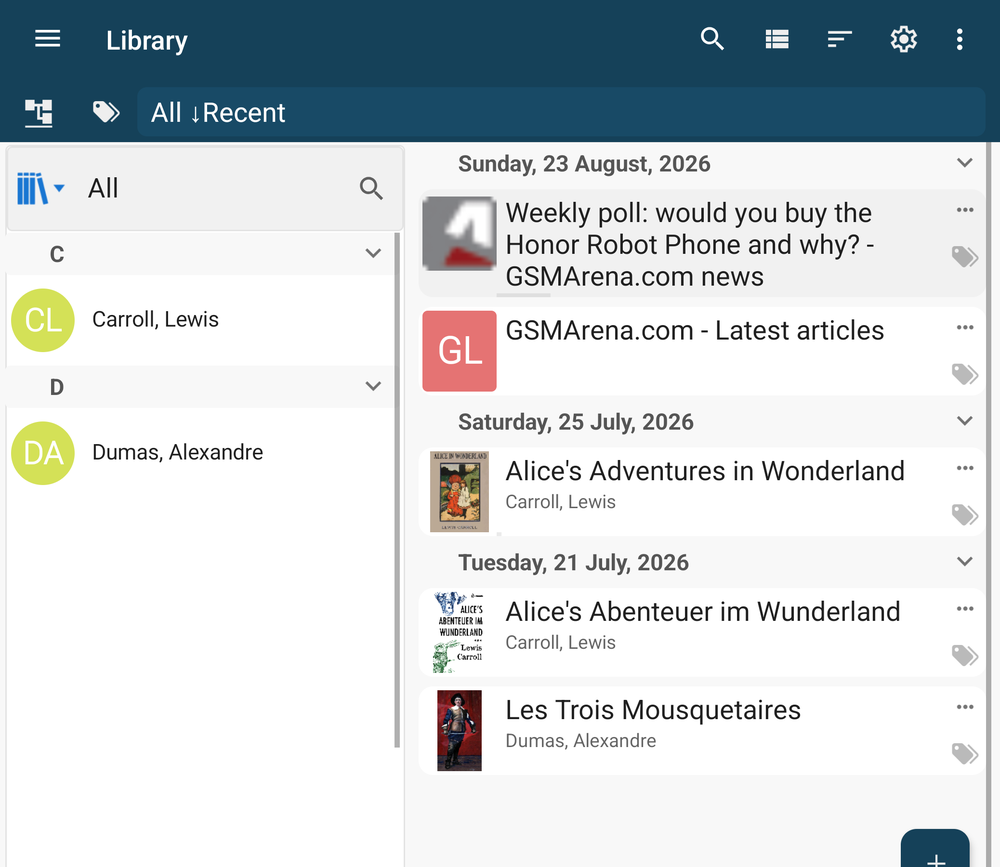
Add your PDF or EPUB textbook to the library. pimReader also opens MOBI, AZW3, FB2, plain text, HTML and Markdown.
Then stop reading it front to back. Use it as a reference for the lesson you are on. The syllabus sets the order; the textbook answers questions along the way. Textbook chapter order rarely matches how the exam weights things.
Per topic: lesson, exercises, cards
For each lesson in your course:
Create the lesson book. A focused text on that topic, saved in your library. Read it as a first pass; it is written for the syllabus point, so it is usually shorter than the textbook chapter.
Create the exercise book. Exercises on the same material. They show the difference between "that made sense" and "I can apply it".
Run the quiz. A quick check before moving on. If you can't pass it, don't move on yet.
Create the flashcards. In the lesson menu, tap Create Flashcard. The specifics: limits, thresholds, command flags, drug interactions, ratios. Exams test these, and spaced repetition is good at holding them.
Read the textbook section last, and only for the parts that are still unclear.
Organise by domain, not by chapter
Make a note folder for each syllabus domain, and put everything you capture into the folder it belongs to.
Deciding which domain a fact belongs to helps you remember it, and in the final weeks you can work domain by domain.
Use tags for things that cut across folders: formulas, limits, easily-confused. Keep the last one up to date: it becomes a list of the pairs you mix up, ready for the last week.
Repetition around a job
This plan fits around a job because reviews are small and daily rather than large and occasional.
Reviews are scheduled by spaced repetition, which brings each card back when you're likely to start forgetting it. Due cards wait in your daily reviews (the Exercise card on Home), and each rating button shows the interval it will set. Be strict with the specifics: a number you bluff in week four is a wrong answer in week fourteen.
A short review session each day keeps the whole syllabus fresh. With sync on, it moves between your Android phone and tablet, so the reviews can happen on a commute.
Use the AI Mentor as a study partner
Two questions worth asking often:
"Explain this like I'll be asked a scenario question about it."
Many exams ask applied questions rather than definitions, so practise the applied form.
"What's the difference between these two things, and how would an exam try to trip me up?"
Exams like to test pairs that are easy to confuse. Ask for the difference and the trap, then tag the pair easily-confused.
You can also ask across everything you've collected: "Where in my materials is retention policy covered?" Search by meaning finds it across the textbook, the lesson books and your notes together.
The last two weeks
Stop new material. Practice exams, timed. Work the easily-confused tag. Review by domain, weakest first.
Keep the daily reviews going. They take minutes and hold everything in place.
What the whole thing costs
Fourteen weeks at five hours a week is seventy hours. Your own certification may need more or less, so set the hours to match your exam.
The aim is not more effort. It is that what you learn in week two is still there in week twelve.
The library, notes, tags, flashcards you write yourself and daily reviews are free; the AI Mentor course, lesson and exercise books, quizzes and search by meaning use AI, which is part of pimReader Plus. When you open an AI feature, pimReader offers Try free for a month: no card, no account, nothing renews. Tap Not now to carry on without AI.